Here’s Why I’ll Never Buy Another Metal Locker
The Locker Graveyard
Behind our maintenance shed, there’s a pile. We call it the Locker Graveyard.
It’s a mountain of twisted, dented, rust-streaked metal doors and frames. Some have locks that are permanently jammed. Others have graffiti so deep it’s practically etched into the steel. Every single one represents a failure. A failure of material, a failure of design, and a failure of my budget.
For twenty years, I’ve been fighting a war against these things. A war fought with rubber mallets, spray paint, and rust converter. A war I was destined to lose from day one, because the standard-issue metal School Locker is, to put it bluntly, junk. It’s built cheap, it lives a hard life, and it dies a quick death.
And the worst part? We keep buying it. We accept this cycle of repair and replace as a fact of life.
Well, I’m done with it. A few years ago, we made a change—a radical one at the time—and it has saved me more time, money, and headaches than any other decision I’ve made. If you’re a school administrator or facility manager who is sick of the graveyard behind your shed, then this is for you.
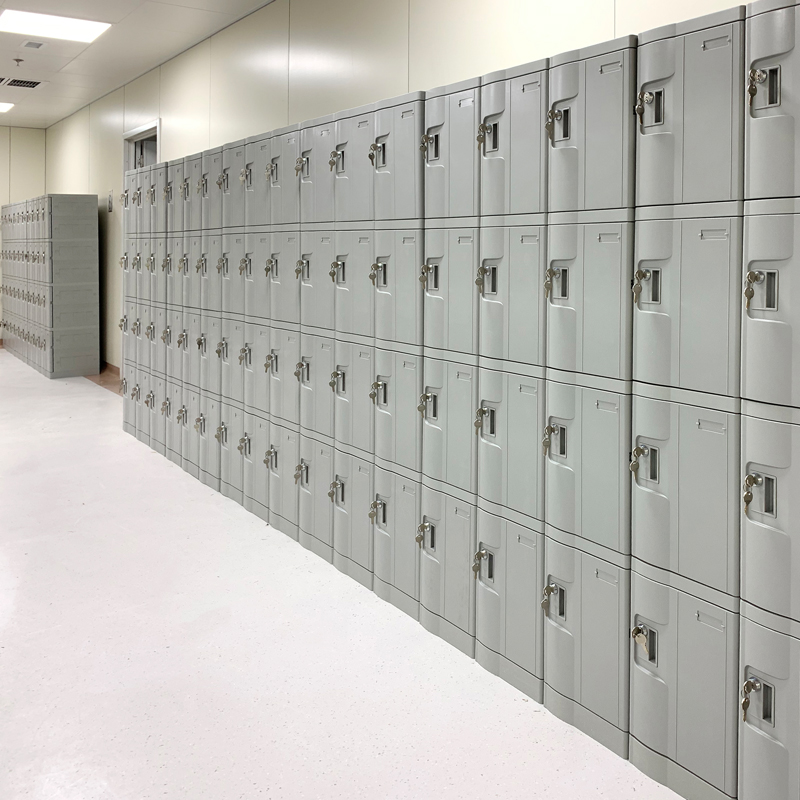
The Two Numbers That Actually Matter
When you buy lockers, you’re presented with one number: the upfront cost. And the cheap metal locker always wins that battle. It looks great on a spreadsheet.
But it’s a lie.
The only two numbers that matter are:
The Ten-Year Cost of Ownership.
Your Maintenance Team’s Sanity.
Let's break down the real cost of "cheap." You buy a bank of metal lockers for $10,000. In year one, a few get dented. In year two, the rust starts in the locker room. By year five, you’re spending a few thousand dollars and countless man-hours repainting and replacing broken parts. By year ten, they look so awful you’re getting complaints from parents, and you spend another $15,000 to replace them. Your "cheap" locker actually cost you over $30,000 and a decade of frustration.
It’s a financial trap. And the only way to escape is to stop focusing on the upfront price and start focusing on the material itself.
Why Metal Fails, and Why HDPE Wins
The problem isn't your students. The problem is steel. It’s a terrible material for a high-traffic school environment. It dents. It rusts. Its only defense is a thin layer of paint that lasts about a semester.
We switched to HDPE. High-Density Polyethylene.
Don't let the name fool you. This isn't your average plastic. This is solid, industrial-grade polymer. It’s what they use for things that absolutely cannot fail. And it’s engineered with properties that are the polar opposite of metal’s weaknesses.
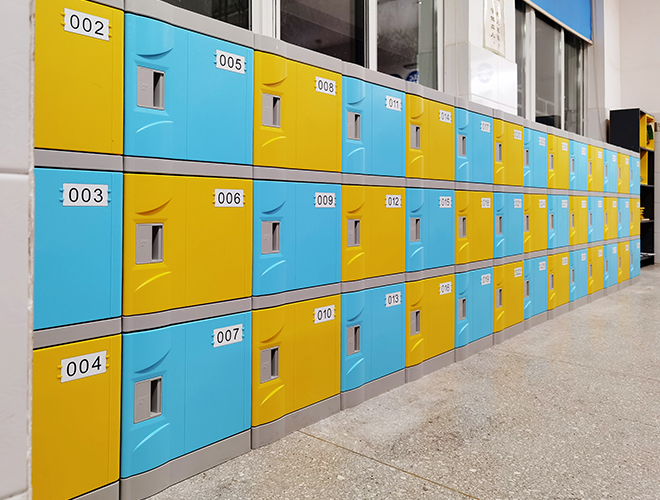
You Can't Dent It. I’ve tried. You can hit this stuff with a hammer, and it just absorbs the blow. It has a slight give that prevents it from ever getting that ugly, dented look. The number one maintenance request for our old lockers—gone.
It Can't Rust. Not "it resists rust." It can't rust. It's solid polymer. We installed them in our pool area, a humid hell that killed our last set of metal lockers in three years. Five years later, the HDPE ones look like they were installed yesterday. This isn't just a feature; it's the end of your biggest enemy.
The Color is the Material. There is no paint. The color runs all the way through the half-inch thick door. A deep scratch will only reveal more of the same color. This means graffiti can be scrubbed off with harsh chemicals without a second thought. You can’t do that with paint.
We didn't just buy new lockers. We eliminated an entire category of work orders. Permanently.
Solving Problems Beyond the Hallway
The world has changed, but the old metal locker hasn't. You have new problems.
Take cell phones. They are the bane of every teacher's existence. We installed banks of small Cell Phone Lockers in our middle school. It wasn’t a punishment; it was a system. Phones go in, learning happens, phones come out. Problem solved. For our sports teams, who needed Academy lockers that could handle wet gear and rough use, the waterproof, indestructible nature of HDPE was a no-brainer.
We even put smaller Classroom cool locker units in the elementary wing for student supplies. It cut down on the chaos of kids running to their main locker for a forgotten folder. These aren't just boxes; they're tools that solve specific, annoying, everyday problems.
The Blunt Conversation About Money
Let’s get to it. Is HDPE more expensive upfront? Yes. Significantly.
If your purchasing process is governed by finding the absolute lowest bidder on day one, you will never buy these lockers. But you will keep paying that Locker Tax, year after year.
This is a capital investment, not an operational expense. You are spending more now to save a fortune later. You are buying back your maintenance team's time. You are investing in a quieter, cleaner, and more respectful environment for your students.
When my principal saw the ten-year cost projection, the decision was instant. It was the most fiscally responsible choice we could make.